Te Tai Poutini – the West Coast – sits on the west coast of the South Island, nestled between the Tasman Sea and Southern Alps. With a population of just 32,900 people, the West Coast is the least populous region in New Zealand, affording well-travelled visitors an rare encounter with untamed landscape and genuine solitude. The region has hosted notable moments in New Zealand’s story: the region’s name, Te Tai o Poutini, is inspired by the legend of Poutini – the kaitiaki (guardian) of pounamu (greenstone), a taniwha (water spirit) who protects both the people and mauri (life force) of pounamu. Today, the West Coast remains defined by its raw natural character, from temperate rainforests to glacier valleys.
Why go
The untamed natural beauty of the West Coast sets it apart. The glaciers extend from New Zealand’s highest peaks to valley floors surrounded by temperate rainforests, creating landscapes that shift from alpine grandeur to dripping forest within kilometres. Among the most renown taonga (treasures) in this catchment are Kā Roimata o Hine Hukatere (Franz Josef Glacier), Te Moeka o Tuawe (Fox Glacier) and Arahura River.
The region offers distinct experiences across its length. The Ōpārara limestone arches at Karamea lie in the north, whilst the Punakaiki Pancake Rocks and blowholes draw travellers to the centre. The White Heron sanctuary of Whataroa is the only nesting colony of the White Heron or Kotuku in New Zealand. On a still day, Lake Matheson provides a perfect reflection of New Zealand’s highest peaks. A range of local craft galleries exhibit everything from hand blown glass and gold nugget jewellery to wood craft and New Zealand jade (pounamu).
When to go
With a temperate climate, there is no bad time to visit the West Coast, though conditions vary seasonally. Summer (December – February) has the least rain and warmest temperatures so it’s the most popular time to visit. Autumn (March – May) is an excellent time to travel on the West Coast. The weather is settled, there’s still plenty of daylight and you get lots of autumn sunshine.
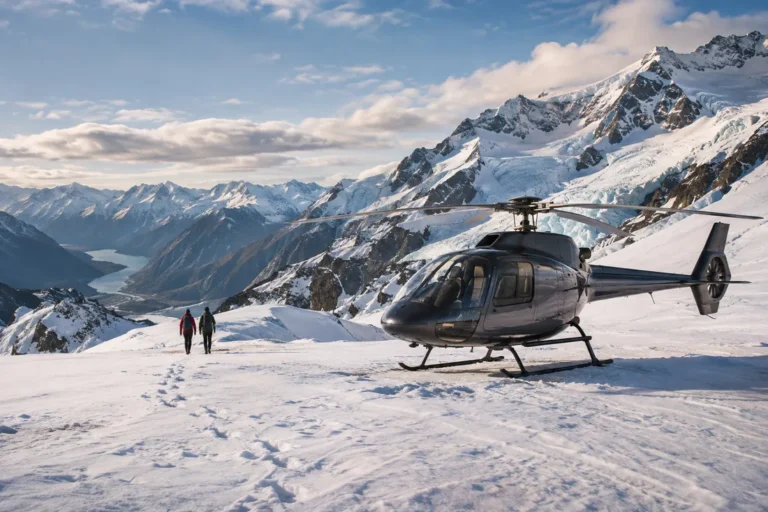
Winter is a good time to discover the magnificent Franz Josef or Fox Glaciers: the West Coast weather is more stable during winter, so flying conditions are better for scenic flights and heli-hikes. Spring (September – November) is typically the wettest season. Notably, West Coast weather can change rapidly, and the West Coast of the South Island is New Zealand’s wettest region and receives rain throughout the year.
Where to stay
The West Coast has developed a distinctive accommodation culture centred on intimate, nature-focused properties rather than large resort chains. The Hokitika Fire Station Boutique Accommodation is the West Coast’s only Qualmark 5-star lodge, offering luxurious service and magnificent views of the Hokitika River and mountains from its rooms. Visitors seeking rainforest immersion will find a rainforest in Franz Josef hides the West Coast’s ultimate wellness destination, the 5-star luxury spa Te Waonui Forest Retreat. Rimu Lodge sits pretty in a prime location – a slice of West Coast paradise – with elevated rural views of the Hokitika River below, native forest and the majestic tips of the Southern Alps beyond.
Wilderness Lodge Lake Moeraki is a luxury eco-destination within the boundaries of UNESCO-acclaimed World Heritage Area Te Wahipounamu – South West New Zealand. For those drawn to forest solitude, Te Aka is a boutique off-grid retreat set across 23 hectares of regenerating rainforest, created with intention and care as an eco-conscious sanctuary.
Browse the West Coast region page for additional options, including luxury lodges, boutique hotels, villas and holiday homes, and spa and wellness retreats.
What to do
- Glacier walks, heli-hikes, ice climbs or any combination of all above at Fox or Franz Josef Glacier
- View the seal colony at Cape Foulwind near Westport
- Explore the turquoise blue waters of Hokitika Gorge
- Go tubing in a glowworm cave
- Carve your own jade necklace
- Okarito Kiwi Tours runs guided night walks in the warmer months for native bird encounters
- Paparoa Track is a multi-day trek through Paparoa National Park
Getting there
Greymouth (Māwhera) is the coast’s main transport hub and the western terminus of the TranzAlpine, the scenic train service from Christchurch. Major towns include Greymouth, Westport, Hokitika, Runanga, Reefton, Dobson, Fox Glacier, Franz Josef, Karamea, and Carters Beach. Most visitors drive between settlements via State Highway 6, a scenic route that hugs the coastline for much of its length.